29 Apr 2026 ● Caitlin Weston
Mental Health Nurse To Functional Assessor: Caitlin Weston On Her Career At PFAS
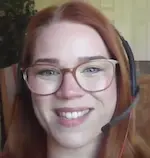
Caitlin Weston is a Quality Assurance Lead at PFAS with a background in mental health nursing. After graduating in 2017, she worked in psychiatric intensive care and community mental health before moving into a functional assessor role. Over seven and a half years, she has progressed through training, coaching and leadership roles. In this interview, she discusses her career journey, the realities of the role and what it’s like working at PFAS.
Why did you want to get into nursing and what were your first steps?
Okay, so early career. So I graduated in 2017 as a mental health nurse. It was a particular area of interest and it was weighing up psychology or mental health nursing, which one. So yes, I went to uni, graduated in 2017 and then spent some time working wards. So I worked on a psychiatric intensive care unit for my first year.
which was fantastic, you know, it taught me a lot of skills from the that was great. And then I moved into the community where I worked in adult mental health. Again, completely enjoyed that until my current job role sort of popped up.
How did the move into this role come about?
No, if I'm honest, I would say I'd been having a look around, mainly different teams within the trust that I wanted to go through. And at the time there weren't many positions going. And I was on sort of job searches, having a look and I kept seeing functional assessor roles come up. And I'm not gonna lie, I think I looked at them at least for a good 10 to 11 months before I sort of took that dive and applied.
About PFAS
PFAS are one of the UK’s leading providers of functional assessments and disability analyses for the DWP. They pride themselves on their clinical quality and team support. You will be joining an organisation that is highly attentive to delivering quality care.
What made you hesitate before applying?
Yeah, no, It wasn't really talked about much. You know, I felt like at the time specifically, there wasn't much information around about the role. It didn't matter how much you Googled, you had a rough understanding of what you had to do, but you weren't quite sure of what the day-to-day role was. And it was that kind of weighing up, do I take the plunge or do I stay where I'm quite happy? And I think the main thing was that I just wanted to open up opportunities and sort of see if I could, you know, develop my skill set in a different kind of way.
What is the role like and what does a typical day involve?
Yeah, so a typical day. when you first, say if you first started within the company. It's fantastic from the way it's staged. So we have a specific learning curve and that is for designated training. So when you join the role, you're not just thrown in at the deep end and expected to just crack on and do assessments. It's very structured.
which I really liked, really enjoyed that and a lot of support from our sort of new entrant training team, which is great. So you'd have your five weeks of training, learning everything about the assessor role.
Do you feel like you’re making big decisions about people’s lives?
No, so as functional assessors, we don't make the end decision, if that makes sense. So although we are making our recommendations based on medical evidence, which we are supplied with from say like GP or other professionals that are involved in the care, we're obviously talking to the customer to help be able to then analyse, you know, a report that we'll then send off. However, we don't make that final sort of decision that is for the case managers.
How do you support people during assessments?
Yeah, definitely. And I think for anyone, say I'm thinking for myself, say even if I have a GP appointment for myself, it can be quite scary. You've got to go, you've got to divulge what's wrong with you or the symptoms you're experiencing. And that can be quite scary. So I think from our point of view, it is to try and make customers feel as comfortable as possible, helping them to feel that actually
They've not just had to sit for an hour on a video call or a telephone assessment, but that they feel heard, you know, while we're gaining that information at the same time. So, yeah, so it can be a big, massive impact.
Jobs at PFAS
Want to work where Caitlin works?
Browse jobs at PFAS.
Apply here on Nurses.co.uk
What is the training and onboarding like at PFAS?
Yeah, yeah. So you're working from home during that training period. I believe there was maybe like one or two days where we went on to site. We got to meet other staff start, you know, getting integrated into the wider team, which was really nice as well. And then, yeah, went on to the next stage.
I think the support and the training that is involved, it's all set by the DWP. So it has to be up to a really high standard. The team were fantastic and they still are. A little shout out to the training team first and foremost, because I think they are the guys that get us through that first sort of definitely six months worth of training on the job.
What is the ongoing support like working for PFAS?
Yes, so the ongoing support, think the reason why I'm still here personally, and I know I'm probably a bit biased now because I have been here for seven and a half years, but the thing that has kept me here is that you don't feel like a number. You know, you are a valued member of the team within your own team and within the wider sort of company, which is really good.
The support in place. So we have our clinical standards leads, which supply, you know, ongoing workshops. you can keep up to date with your revalidation and bits and pieces like that. We've got ongoing medical training, which you can have. And I think personally, for me, that was something I found really useful.
What do you enjoy most about the job?
Yeah, I love being able to talk to people. I think that's definitely a massive thing. Being able to make that difference to what can be perceived quite a daunting experience.
You can ensure that their experience is really good and a positive one. You can log off at the end of the day and go, yeah, did a good job, you know, and you get to have a debrief with your team.
So by the time you log off for your day, you're not carrying anything home with you, which I think is really important. And that is something the company really, you know, focuses on.
What challenges might someone face in this role?
Okay so there could be, let me have a think, it could be say you're scheduled in for your assessments for the day into the slots and it may be that somebody doesn't answer or they don't turn up for the assessment so it may be that you have to follow through the processes and it may put you slightly back.
On average on the timings it roughly works out you only run sort of 17 minutes later than planned so it's not a big difference but I think when you first come into the role that can be quite you can feel quite stressful.
What skills are important for this role?
so firstly I would say active listening skills is really useful. Obviously you're listening, you're typing at the same time, so a little bit of coordination would be really handy.
I would say being empathetic understanding. And being clinically curious as well, that really, really goes in hand. You know, you can have a conversation unless someone asks you that next follow up question, you're never going to get that full answer.
so yeah, clinical curiosity, active listening, good typing skills would come in handy, but don't worry too much if not.
Nurse Assessor Career Guide
Develop your career with our Nurse Assessor Career Guide. Discover training & qualification routes, duties, salary, skills, progression, employers and more.
What are the working patterns and flexibility like?
Yeah, so there's hybrid working roles, which is really useful. Personally, I was a big bonus for me, you know, when I first joined this.
it's half eight till five. Monday to Friday working. no weekend working, no shift patterns or night shifts, and you get your bank holidays off as well.
I know that PFAS offers flexible working if you do need that, or if you wish to have that, or even part-time working as well.
What career progression opportunities are available?
Yeah, so the skills obviously as a functional assessor are really transferable. PFAS itself, I have to say, have really supported myself and many others of my colleagues, you know.
So I started off as a functional assessor within a year and a half to two years. I was then on training. So I was being up skilled because I showed interest in wanting to be a clinical manager at the time.
You can also go into like clinical coaching. So you could then be supporting new entrants. We have champions, so sort of mental health first aiders.
You can go into being like quality assurance lead, which is what I'm currently in because I like the data and I like being able to still support clinically.
You can go into all sorts, which I think is something that has kept me in this business because I know it's not just one job role, you can expand and upskill into various different roles.
What advice would you give someone considering applying?
Definitely, yeah. And I would say, you know, even someone is looking for the job role and they're on that fence like I was for so many months, contact the recruitment team.
we are lucky to have really good recruitment team. I get to work with them quite closely sort of week to week and they are open for just even a general chat without an application as well, which is really useful.