6 Oct 2025 ● Matt Higginson
Why I Love Working Within Occupational Health
Clinical Operations Manager Matt Higginson shares his journey from emergency nursing to occupational health, rediscovering purpose in supporting employee wellbeing.
I commenced my Bachelor of Nursing degree course at the University of Glasgow in 1992 and following graduation in 1996 stepped straight into emergency nursing having enjoyed the hustle and bustle of emergency nursing as a student. Over the course of a few years, I worked within several A&E departments across the UK, worked alongside mountain rescue teams and ski patrol in a voluntary capacity in the north of Scotland and gained experience supporting the local fire station with trauma training.
I undertook a Post Graduate Diploma in Emergency and Trauma Nursing which further enhanced my ability to assess and deal with a wide range of medical emergencies and as a supervisory manager the challenges facing the colleagues I was responsible for. At this stage, I couldn’t imagine moving from emergency nursing, however within a few years and the arrival of my own family and the challenges of managing childcare with “random” off-duty shift patterns; I took a leap into the unknown and applied to join the fire service, having a fixed, long term rota pattern facilitated better work/life integration enabled me to spend more time with my children as they grew up.
Developing Leadership and Resilience in the Fire Service
Over a 17 year period I worked as an operational firefighter, crew manager and watch manager within Staffordshire Fire & Rescue Service (SFRS) and South Wales Fire & Rescue Service (SWFRS) thoroughly enjoying the extensive training and development, responding to all manner of emergencies fighting fires, dealing with road traffic collisions, hazardous material and working at height incidents and dealing with major incidents as well as widespread day to day engagement with local communities.
During this time, I developed my skills as a supervisory manager and gained a wider understanding of the potential complexities within the workplace, keeping colleagues motivated and engaged, especially during difficult times, including several periods of strike action and significant organisational changes.
Returning to Nursing Through Occupational Health
In 2015, having moved to Wales in 2011, I had the fortune of being involved with the Welsh Government “Talk to me 2” suicide prevention strategy, representing SWFRS, and over the course of 2 years attended regular multidisciplinary meetings with other fire, police and ambulance service representatives, academics, psychologists, community and hospital based mental health professionals, outreach workers, as well as those from various mental health and suicide awareness charities, working towards long term moves to help reduce the number of deaths by suicide in Wales and work to increase education about effective support for emergency workers, clinicians and the public. I rolled out training for all control and specialist rescue staff about suicide prevention, to compliment previous training (ASSIST).
This immersion within a clinical environment, which I had not had for several years, (my original nursing registration having lapsed in 2008 with it no longer being sustainable to work the necessary clinical hours on top of a fulltime and emergency response role within the fire service and bringing up a young family), rekindled a burning desire to return to nursing and in 2016 I embarked upon my return to practice course at The University of South Wales.
Following successful completion of my return to practice course in the summer of 2017, I contacted one of the directors of Insight Workplace Health (Insight health Screening at the time) Chris Terry who I knew through our shared passion for skiing and the outdoors, he encouraged me to come for a “chat” and consider undertaking some part time screening nurse work to support them as they grew.
After a chat and working no more than a few shifts within the “occupational health arena” at the head office in Llandarcy (near Swansea), I was sold and having been offered a fulltime role to work with them, took the decision to change careers and I returned to nursing once again*.
*I was very fortunate that I was able to apply for a 2-year career break from the fire service to allow me some time to determine if a long-term return to nursing was for me.
However, I never returned to the fire service, within a few months I was loving every day in the workplace, working within a friendly staff, in an agile and rapidly growing commercial occupational health business, engaging with interesting customers and clients. This environment was very different from the previous 20 odd years working in the public sector, it felt like a breath of fresh air.
Occupational health isn’t necessarily for the faint hearted and as the Clinical Operations Manager for a nurse lead team of Occupational Health (OH) clinicians including physicians, nurses and technicians I know the real challenges which can face OH clinicians supporting employers and employees through some of the most challenging life events which may impact us all at some point in our lives, but I love working within OH, here’s how I found my ideal job.
Building on Leadership Experience
It wasn’t that I didn’t like the day-to-day in the fire service work, and of course initially I missed the excitement of responding to emergencies on blue lights a little, however undertaking a varied workload, working autonomously in the main and connecting with clients and customers daily, feeling appreciated by colleagues and the directors for the skills which I brought with me to the role “filled my cup”.
My OH journey started with undertaking health screening work, immunisation clinics and phlebotomy but within a relatively short period and with excellent support I started to undertake case management actively supporting employees to remain in work providing recommendations to employers about potential adjustments they should consider when supporting staff to remain in work or when guiding individuals back into the workplace following life changing health events, heart attacks, strokes and cancer.
My experiences as a line manager over the previous decade and a half, assisted me when speaking with employees and line managers about the challenges of sickness absence and implementing workplace adjustments and the importance of communicating effectively, when supporting colleagues.
Leadership, Growth, and the Evolving Role of Occupational Health Nurses
Over the course of the last 8 years, my role within the business has continued to evolve, and I have been supported by my employer at every step of the way, I rapidly completed my occupational health degree through Robert Gordon University in 2020 and subsequently took up a role as a senior occupational health nurse becoming more actively involved with managing the larger contracts actively engaging with health and safety teams and human resource departments, guiding and supporting them in policy writing and looking after the overall health and wellbeing of their workforces.
We have increasingly engaged with educating supervisory managers within organisations to enable them to better connect with their staff over matters relating to health and work and continue to be at the forefront of driving a service which seeks to exceed our customers’ expectations. More importantly however, as a business we practice what we preach, we look after for our own staff, enabling them to obtain the work-life balance they desire, accommodating requested adjustments as far as practicable and being empathetic to the challenges they face.
Having been the clinical operations manager for Insight Workplace Health for 3 years and currently employing over 45 clinicians: the technological advances during the Covid pandemic enabling us to employ clinical staff from across the UK, the future is looking very bright.
Despite the occasional challenges, I love my work and coming to work every day, and despite many of my old colleagues from the fire service now retiring as they reach their mid-50’s, I am in no rush to do so. I continue to feel that I am making a difference to those I engage with daily including colleagues’, customers and clients. I get a daily “buzz” from supporting the fantastic team of clinicians that I work with to deliver the best possible service they can.
I am very optimistic for the future, I see the role of occupational health clinicians, and occupational health nurses in particular, being a vital component to ensuring that a business has the ability to operate effectively, nudging employees to make healthier choices and support those affected by short- and long-term sickness which may impact upon their ability to undertake some or all aspects of their role in work.
Here’s to ongoing opportunities for nurses to play a pivotal role in improving the health of our working population.
Jobs for occupational health nurses
Thinking about a career in occupational health like Matt?
Discover more about occupational health
Explore our in-depth guide, created in partnership with the NHS, to learn how this vital field supports health and wellbeing.
About the author
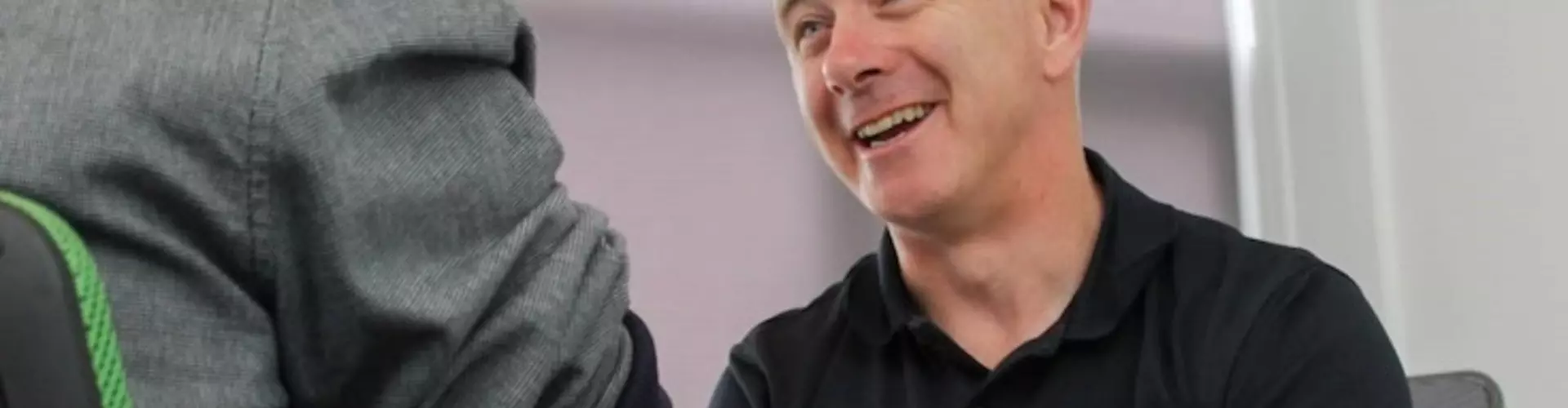
Matt Higginson — Clinical Operations Manager, former emergency nurse and firefighter, passionate about wellbeing and workplace health.