9 Sept 2019 ● Liam Palmer, Registered Home Manager
Care Home Quality Podcast - episode 7 with Angela Fletcher, Chief Executive of Happy Futures
Liam speaks with Angela Fletcher about her career journey from Support Worker to Learning Disability Nurse to Operations Director and then founding her own care services centre in Scarborough. Full of energy, Angela speaks to Liam about how she achieved CQC Outstanding. They explore her ideas, innovations and the passion she has for the people in her care and the high regard she has for her staff. If you’re a manager in care, or aspire to run your own care home, read on for an hour’s worth of tips and information!
Topics covered in this podcast
07.56 The concept behind Happy Futures
13.31 Angela’s values as a care manager
19.34 CQC Outstanding requires high levels of staff engagement
27.48 The importance of staff guides, booklets, support plans and training packs
40.16 Angela’s approach to business
43.29 Building a business that places people before profit
47.43 Reading books to develop
51.23 Peter Senge’s ‘Learning Organization’
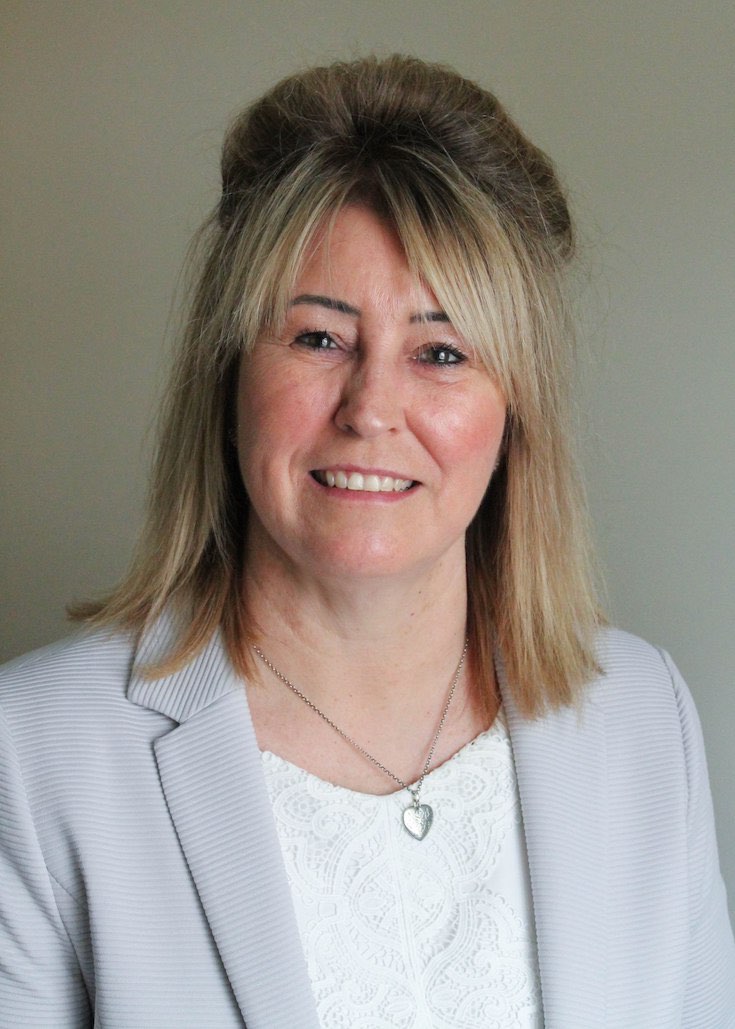 Angela Fletcher, CEO of Happy Futures
0.00 Introduction
Liam
Just a quick preamble before introducing my next guest. This guest was recommended by Samuel Barrington and having met her I think the two main reasons Samuel would have recommended her one was that she runs and owns a CQC Outstanding rated service.
And secondly, she has a very astute, commercial instinct and has got that focus on quality, but also being commercially viable. She's got those two forces to kind of work together in an optimal way for care business which which is unusual.
They are two particular reasons why Samuel came to recommend that I meet her. So I drove up to Scarborough from Birmingham to meet her and stayed over so that I could get the most from my time with her.
I didn't really know what to expect but it was way better than I could have imagined. I think when I reflect on this interview, it really is so encouraging to know there is this kind of excellent practice going on in social care businesses up and down the country. So I do hope you enjoy it.
I'm delighted to be introducing you to Angela Fletcher. Angela, would you like to introduce yourself and also talk a little bit about what you're doing now? And what's important to you?
Angela
Yeah, I'm Angela Fletcher, the chief exec for a company called happy Futures in Scarborough and I am a Learning Disability Nurse and I'm very passionate about caring for people who are vulnerable with people with learning disabilities mental health and complex needs recently.
I've been awarded the Cobell Star Award, which was a great honor. We are multi award-winning company.
Liam
So just for listeners... I came here today. It's Friday the 19th of July 2019.
I first met Angela in person today. She's showing me around her center, the Happy Futures Center here.
It was an introduction through Samuel Barrington. Samuel had talked about Angela in glowing terms. It was the ethos, the sense of energy, the sense of passion.
I gather that Angela's very driven and had done something a little bit different with the culture with her Enterprise and that got me curious and. I was really glad that we did get to meet in the end.
I had a look around the center Angela gave me a grand tall and introduced me to her staff. I mean my first impressions were there's an extraordinary amount of good practice here and you're so do you want to.
Talk us through what you've got here for the listeners how the organization is set up in particular and wanting the listeners to understand the sense of rigor and the approach you've taken too. Getting this service right to Outstanding.
Do you want to just talk us through that?
About Happy Futures
Angela
So the main thing is I set up the company in 2012.
My first job supported for people in Whitby and in 2013 we moved across to Scarborough.
And now we support people in Whitby and Scarborough. And finally, I've built the company since 2013 by 1700% which is a bit crazy really but...
I've been working on a project with a housing provider and a developer called Tree Tops, which is 13 bungalows in Scarborough.
And we support people in the Bungalows who have complex needs like brain injury mental health needs and physical disabilities. We also have a skill center.
We've got a multi-sensory room and different areas within the center that people can access. You can access the skill center anytime day or night.
So it works really well for our individuals. We work with people from low support needs for four maybe five hours a week to people with very complex needs who are on two to one support 24 hours a day.
We're currently doing the autism accreditation. And in this last year we've been working doing lots of adaptations to our work and processes to put things in place around augmentative communication strategist easy reads booklets. Lots of paperwork and we're continually developing and expanding our services as well as expanding our team currently up to about 92 staff.
Happy Futures the way I built it is that I've never used agency workers and the way we get around that is we've got a massive management structure. So it's probably got 17 people in our management team currently so that goes from your support workers to your complex care workers to leaders then to manager business support managers, business coordinators and our marketing team, finance team. We've also got our senior management team.
Liam
So yeah, it's really really great.
So I think let's try and explain what I saw when I came in and then and you know, you can fill in the blanks.
I really want the listeners to get a feel for what Excellent looks like in this in this particular setting. So what I saw when I came in I saw lots of structure very defined responsibilities with your staff and the different departments define responsibilities around.
Specifically I noticed people were very engaged. There was no Silo working. I noticed that your team were very engaged with you as a leader which was great to see I notice that your team were the sort of people that I'd employ in my care service you can see in their eyes is a kindness, there's good eye contact a sense of joy and hospitality.
Passion was evident and very focused and that certainly struck a chord. I can sense of common common theme in all the staff that I met as I went through the building and they took me into that really large room with the 10 or 15 themes.
It was beautifully laid out that was something I noticed and there was so much thought put into each themed area.
It was extremely personalized. And it was it was a lovely place to be funnily enough. So Angela, just explain a little bit more about the thinking behind this?
07.56 The concept behind Happy Futures
Angela
When I was at University a few years ago. I actually did a poster. So it was actually from that poster that gave me out the idea of the center.
So the concept was a guy on a tightrope and it was walking on the tightrope and he was holding a pole and on one end it said empowerment on the other end it said dis-empowerment and underneath there was an net and under in the net it said Support Network.
Underneath the net it said things like depression, anxiety, sadness, loneliness, but up above in the sky it said things like education, employment, choice, rights, inclusion.
And I had a concept at University where if you are walking along in life you are the guy on the tightrope. If you had a little trip and you landed in the net you're really lucky because you had that support network to help you back up to get you back on that rope and on the straight and narrow. If you fill outside that net it wasn't going to help you
So how could you get back up on the net or even back up on on your with your life without that help and support from someone? If you was walking along and you were happy with your life and you are getting the correct support then you could have all the choices above your head.
So you could be in the clouds and look at all the choices that you could have and look at things like education, employment, social activities, engage with friends and having a decent life.
So from that I was I did run some care homes. That was my background and I used to support people to move them on into the community. But I found very quickly that within eight to ten weeks we would get them people back within the care home and it had broken down for some reason and I thought there was something within the community that was missing.
That's why I came up with the concept of the skill center.
Now some people had my support for 20 hours and once they exhausted that support, you know, I didn't want them feeling that the opposite at home and worry about things like a bill came through that they didn't understand or just that they might have been having a bad day.
So I kind of created this environment that when the support is exhausted that they can come to the center anytime to see a manager to have a cup of tea, to kind of meet up with your friends and the complex worked really well.
We've got a really amazing track record of supporting people and reducing that support and when we reduce it to a level, we actually hand the packages back to the local Council to say that we've done our work now and actually these people can't be supported by not a specialist provider any more.
People previously, you know, started off in a hospital setting on Two-To-One support and now they're living independently in the community with no support. So yeah good track record and we're doing really well.
Liam
It's complex. We had to explain I think it's very abstract, isn't it?
So, let me cover off a few themes that identify when speaking and listening with you Angela.
I think you've covered the first one to some degree and then I'll give you a bit of space and time to talk about the second one.
So to start off then what comes across very strongly to me. In terms of listening to you Angela as a commercially successful entrepreneur and multiple entrepreneur is that you're focusing on the un-met needs of the customer.
It's something that you've identified and I find that really fascinating. It reminds me of the first podcast with Jeremy Wolford that other outstanding rated service and he was very focused on the customer and serving the customer better and he got creative.
He ignored what other providers were doing and his ethos was kind of you know, if the customer wants that why can't we do it?
You know, what's stopping us? Nothing? The thing stopping us is our self and our own limitations and I'm really fascinated that you've done a similar thing with the offerings that you're giving to these people you're serving and how that's helping and how that's actually working for the commissioner because you're actually lowering costs by providing a great service.
So really fascinated with that.
I think the common theme which comes across very strongly in listening to you is the importance you place on treating your staff. Why I say that is because it's so unusual and by that I don't mean, you know, just smiling and saying nice things, you know, the approach you've taken is a lot deeper than that in terms of embedding different policies, different practices, coaching methods with mechanisms, if you will.
There's a real high sense of regard toward your staff kind of woven into what you do and the whole ethos of Happy Futures actually, so really fascinated to hear about where that comes from. So would you like to talk to us a little bit about your views and your values in this area? Thanks.
13.31 Angela’s values as a care manager
Angela
I am the chief exec, but my other name is the Head of Happiness because we're happy Futures! And you know the concept of happiness, you know, has got to be one of the my top priorities so, you know, I've worked in the sector for a long time.
I've worked in numerous roles from support worker to nurse to Senior Management roles. And I've seen some really amazing practice and some really bad practice of how people treat their team members and I've taken on the good and left the bad! And I really feel that when you don't have ego, when you listen to people, when you take on ideas - you might not always agree with the idea - but you chat that through and say 'well it's a great idea. Let's try it. If it doesn't work, you know, we could look at something else' If someone is in my team and they're in a new role and something's not quite right it's how to approach that.
So I tend to kind of you know, I might sit with one of my managers and say I've looked at this to me it's just not working. So let's think together how we can improve the situation. So let's sit and kind of look at what we can do to make this work rather than criticize. If there is something that's not working, I would never criticize I would just say we've probably gone the wrong way and that's probably all of us. We're very very open. Again if we make a mistake, we all put our hands up as a team, you know.
The first thing I say when I got my team in place was, you know, please never tell me a lie. I always want to know what the truth. I don't always want to know what's happening the organization. We report everything. Sometimes we report things and ask why did you report that!?
But, you know, we want a transparent team. I want a team where anyone can walk through my door any time and ask me a question not feel frightened. I want a team that I can spend time with, you know, we love kind of having events, dressing up having kind of time together and that's about kind of being an accepting manager and also that you feel a passion about kind of developing your team.
So for instance, everyone in Happy Futures... If you're in a finance role, you would have gone to complete some kind of finance course. If you're in an HR role you will do a CIPD course. Team leaders are all on NVQ5. I'm just currently signing people up to the Btech course on positive behavior supports. Staff from support worker right through to Management are all doing that course at different levels think it's really important.
We've designed our own safeguarding course, which is six hours. We actually give staff a bit of home work to do! We've had great feedback. We've also designed an autism-specific course. Again, you know, we have live discussions around our individuals. Another thing that we do which we feel works really well in our company is we have great communication across the team. So if we are supporting individual who may have had a change in their presentation we go straight into a online team meeting every shift. So what we do is, the support workers, as well as writing their daily notes they would email their team and copy in all the management.
So I might read something and think 'have I tried this?' I can't be everywhere but if it's not quite right I can give my input. We do that and we we log every shift if anyone's got a change in presentation and then we might have to say well, you know, I'll try the GP. Could it be pain? Could it be this? Could it be that? Should we involve the LDS team? So it's a very effective tool. And we've been doing that probably for the last three years as we've grown as a company and split our teams up and got team leaders in place.
Yeah, so it's about 20 staff. All my staff get a bonus, they all gets thank you cards that I write. Every staff member at Christmas will get a handwritten letter from me. It will be about how they work, what their skills are and I'm really grateful that the here working for my company.
And they all get a Christmas bonus. At Easter we get Easter eggs! And during the summer we tend to get little shop vouchers along with Amazon vouchers. And throughout the year we have little treats.
Every month our staff get ten pounds towards the phone bill as well because I think it's important if we're ringing staff that they get a little contribution towards that as well. I'm currently looking at Champions within the company.
We have got Champions at the moment. But as we've grown in size we're looking at specific kind of champion roles going forward.
And within those roles people will be working on specific training and development to ensure that you have the skills and knowledge and insight around the subject. So if we've got an autism Champion, they will be working towards some kind of autism qualification.
As I have grown the business I've been able to get a little bit more money behind me my focus has probably for the last 18 months been on training and we've got a big focus on training. I think there's nothing better than getting feedback from your staff that they've enjoyed a course and it's been fantastic.
One of my staff a few weeks ago were going on leave and said, "I wish I wasn't going on leave Angela. I'm going to miss work so much!" [ the member of staff asked about going on a course]. So I said "tell me what you want to do. And if I feel it benefits the company I'll pay for it."
So she came back and said, I've found a post traumatic stress disorder course, and I think it'd be really helpful for some people that we support and I'd really like to do that while I'm off. So again, she wanted to be off but she wanted to do something productive. So I paid for the course.
19.34 CQC Outstanding requires high levels of staff engagement
Liam
I just want to take a moment to summarize some of the key points that Angela's making here.
I think that what's woven into the tapestry of how she runs the business are some principles which are quite revolutionary.
I just want to make sure that those points aren't missed. So what comes across quite strongly to me is very much a holistic view of really engaging with her staff and it's that approach that is bringing these high levels of Staff engagement with her team and I think that has a direct bearing on her getting a CQC Outstanding so want to break that down a little bit more.
There are lots of care businesses out there that jump on the bandwagon of Staff engagement.
And you know, we'll add a few extra benefits or the odd voucher if you're in there and I think those things are positive but I think often they are tokenism. It's a new badge. It's a new gimmick in a way.
But I think a style of leadership where all the things are concrete and whether it's a gift, whether it's a birthday card, whether it's a thank you card where all elements of the employee experience communicates respect for the staff member. That communicate parity with the staff member, that communicate that we're all a team.
I think that's unusual and I think that's what's quite special about what Angela has done here for someone who works at Happy Futures. I think that all these pieces together of the employee experience are communicating to them. And I think they're communicating that Angela is saying to the staff 'I value you. I respect you. You can trust me. I will look after your needs. I will reward you. I will treat you well.' Which which is some great messages.
Something you talked about earlier Angela was that you said that you worked as a support worker before and that you weren't treated well, and so it seems to me in my sort of simplistic way that what you've done with Happy Futures is that you've created the ideal, you know, you turn those bad experiences and you said 'you know, why can't we treat staff really well?', 'why can't we give them a gift when we got outstanding?'
That seems to be exactly what you've done and I think this is a really positive message for care groups out there because I think everyone wants a high level of Engagement from their staff in terms of care delivery, in terms of consistent quality.
This is something I'm passionate about I write about and I think that if you want high levels of Engagement from your staff it all comes back to how you treat the staff and that's what I would call the totality of the employee experience.
It's all the different touch points. It's all the different elements of working there - from the rewards, to when things go wrong. All of those touch points reflect how an employee experiences the organization; how they feel about it. And in some ways, I think, how committed they are to it. I think you've proved getting your staff to commit and engage with you is not that hard in some ways.
It's as simple as: treat your staff well, treat them with respect, don't bully them, don't trick them. Avoid all these negatives and use the organizational structure to help them to succeed.
It's only when we stop these negative behaviors in my mind that staff will truly trust us and give us their best. I might have overshot a bit there Angela but what your thoughts?
23.52 The fun of spontaneity
Angela
Yes, definitely and you know, I'm quite spontaneous. You could probably speak to my team and find out that but you know, I'll be in the office and I'll just kind of walk around to everyone's door and say can you be free for two o'clock.
And then I'll say we'll close up the offices today and we're all going to Treetops Bungalows and we're going to make hot dogs for everyone and we're going to have ice cream and we do things like that. Very spontaneous.
We might go for a picnic and that again is a lovely buy-in for your team. You know, they say that our Management aren't just behind closed doors but are working with them, enjoying ourselves with them and just having having a nice nice time.
I've never worked anywhere where my bosses would ever dream of doing anything like that.
Someone once said to me "when everyone's going north you go South" and that's what I'm doing!
Liam
So I want to draw out a little bit more, talking about staff engagement and good practice in this area.
I did a brief article on this actually, reflecting what you've done here, Angela. Part of the points made in the article was to say that it's often leadership behaviors which actually disengage people.
I mean, there's an assumption here that we've recruited well, and we've got good people whose heart is in the right place, and they mean well, so I'm talking about THAT particular group of people.
So within THAT context I'm saying that it's often leadership behaviors which disengage people as we mentioned before: it's the bullying, it's the blame, it's not being fairly rewarded, it's not being listened to, it's not having people's opinions considered.
It's those sort of behaviors that make staff feel unwelcome, not important and therefore they don't engage in response to it. So when the same manager gives them a card to say I appreciate you it's not congruent.
I think the card is a nice gesture, but if all the other gestures and touchpoints are communicating something different it's not going to go very far. So that's why, you know, I'm really interested to hear about about Angela's good practice. I think it outlined some very simple truths really that, as Leaders, if we do treat people well and if we do it consistently without dropping the ball, or apologizing if we do, that our teams will trust and engage with us. I mean Angela has talked about staff being being with her for 10 years.
Loyal, good staff staying for that sort of period is a testament to this sort of approach. It's not rocket science. Is it invest in your staff? Treat them? Treat them with integrity?
In many cases they reward you with loyalty and with high quality work. And I think the second part I wanted to to draw upon continuing this theme of quality, but I guess a different strand.
I think thus far I can understand you've got quality by focusing on the needs of the resident or service user. I've got that. I've understood that you've got a positive culture with a high sense of Team engagement with your staff and in many cases, I think that does lock in good people as it brings a sense of security and continuity to their lives and to their to their work lives.
27.48 The importance of staff guides, booklets, support plans and training packs
Liam
That all makes sense to me, but there's this other piece you mentioned earlier and this was - you talked about having guides to how you do things, which are then used in inductions and you talked about how other people might want to use them.
And that just quite excited me actually! It reminded me of quality manuals from days gone by, and how every job was written up.
And actually there's some very tangible benefits with that sort of very very structured approach. I mean what what comes across very strongly is a level of rigor you've put into these things because I know how long those exercises take.
So would you like to just explain why you've done that? Why have you put so much energy into that and what are the underpinning principles behind it were you trying to achieve?
Angela
Yes, of course. What we've been doing probably for the last two years as well as focussing on training the staff in different courses and developing that area of the business, we've been focusing on our paperwork and making a lot of booklets and easy-reads information and new support plans, new assessment booklets, new induction booklets, new training packs.
So what we've got now is a very, very comprehensive induction pack, which is in a booklet. And we've got pages that you can tear out that can then go in the Personnel files.
But what we've done is we've given kind of specific examples right through the induction booklet of things that we feel are hot spots that people really need to know when they come to work for Happy Futures. So: our expectations; we've got a dos and don'ts policy that's in there; we've also got live examples of, say, an individual who might be coming in and their prescriptions arrived and there's not a manager around and how to fill in the information on a chart.
So we've got a summary of the individual with something like 15 points and then the chart with numbers up to 15 and it'll say the name of the person, and then that'll be point one.
So it's very kind of simplistic, but it's an easy read guide for the staff to take away with them. So we've done that for medication. We've got a reading and writing guide in there which takes you through narratives of someone who's written daily notes incorrectly. So what we want in those notes and the difference between the two, and then staff get to ask questions about why we have put that in place.
Also, we've got petty cash. So, anything that staff will deal with on a day-to-day basis, again, we've got kind of 'how to photocopy receipts guide' in the. Again, a numbered guide so it's very very simplistic to follow.
But it's a good guide for when staff get working in the services and looking at what they're supposed to be doing, you know because it is very daunting having a new job. I think you know. It's hard to get your head around working for any company. I think the easier we can make that I think it's better. We've also got a 35-step medication competency assessments. So that is something that we've developed and added to. It's very, very robust.
We've had great feedback from our CQC inspector about that particular book work and and some of the booklets but that one in particular saying that you know, it would be something that we could probably market across the sector.
Liam
Angela, I want to explain why I think that's significant. So just to recap we're talking about innovation and leadership in quality.
And when I think back to my times in manufacturing distribution, very structured environment, lots of processes lots of tools around consistency of product and service and one of the things that I learned from there is there was a big focus on documentation and documenting everything, every constituent part of every process and in that way they were able to manage quality when you're dealing with hundreds of thousands or millions of items.
And I think there's a kernel of Truth in that, in that if you define what you want clearly then the process of doing it ultimately helps you toward consistency.
The second part is to ensure that people behave in a uniform way to get that consistency. But before you can do that, you've got to define precisely and exactly how you want something done.
So I'm really really interested that you are using those ideas those principles and and obviously in having it it's a perfect training guide, isn't it? It's a is a clear standard for coaching. It's a service standard and it's a tool for creating sustainable quality.
This is something that so few people talk about let alone work.
Care Homes and Care businesses often go up and down you know, from outstanding to inadequate within months and this is often where some of this kind of infrastructure, some of these values and practices are not in place. So very interested in hearing your take on this. It sounds to me like, you know, inadvertently, you've almost created a training academy. Because you're able to take someone and, you know, a new employee and through the training experience you're able to impart the values, the ways, the behaviors and the technical competence to do the job to required standards. And that lack of ambiguity and the fact that you can do that, you're less reliant on how people interpret it.
You've got a formula really. You've got a method to craft people, you know, craft behaviors, craft understanding in the way that your service needs are very interesting and, you know, the fact that the CQC looked at your training materials and said perhaps you should market it, I think it's clear they've done a pretty thorough job there. So congratulations. They're very impressive.
34.54 Angela’s personal story
Liam
Let's move on now if we can Angela to talk a bit more about your your personal story here. We talked earlier about your work as a support worker and then how you became a nurse and then a social care manager and moved up the ranks and here you are as a successful serial entrepreneur in social care. So for the benefit of listeners, can you talk to us a bit about your key moments in that trajectory?
What I'm looking for is potentially some lessons, some nuggets, some help for people who might be nurses who want to become entrepreneurs. Or social care managers that want to own a care business.
Could you talk a little bit about what those steps were or what happened and how did those things came together for you.
Angela
So I was a support worker. Prior to being a support worker I looked after my mom when I was about 11 and then I went in to support working when I was about 17.
I worked in a residential care home and then went on to working as a nursing auxiliary. I worked in elderly care and I loved it but I especially loved supporting the people living with dementia. It was my passion. I absolutely loved it.
But when I got to about 22, I felt like I was like a little bit depressed really in my job because I've seen so much death