21 Jul 2017 ● Lauren Young, RNLD (Learning Disability Nurse)
My diary as an RNLD Nurse: part 1
Newly qualified Learning Disability Nurse and Social Worker, Lauren Young, talks about what it takes to be successful working with those with learning disabilities.
I am due to qualify as a Learning Disability Nurse, and Social Worker in August 2017.
I am looking forward to starting my new job working in a care home with people who have early on-set dementia.
I first worked with children who have learning disabilities whilst studying classical civilisation in Leeds. This progressed into working as an agency worker, covering shifts in various care homes with children and adults who had autism.
After seven years of working in care, I realised I wanted to take my passion further and qualify at a professional level.
At Sheffield Hallam, the dual course provides a holistic approach to care that encompasses values and ethics from nursing and social work.
It was a big decision to go back to undergraduate level and gain another degree, but I have no regrets.
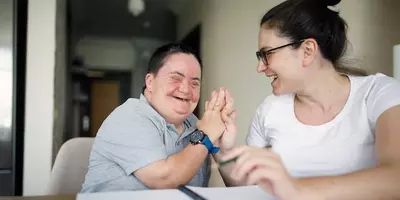
The most enjoyable part of my work is finding ways of effectively communicating with people who have learning disabilities.
This may be verbally using simplified sentences and pictures, Makaton sign language, or maybe computers. Through doing this, I can include people with more severe learning disabilities.
I am passionate about giving the people I work with, as much independence as possible. This could mean supporting people with their finances, or helping someone make a drink of their choice.
Some people with severe and multiple learning disabilities can find even the smallest task a challenge. But they may be able to communicate using their facial expressions, or other subtle means.
It is my job to liaise with those who know them, to figure out their strengths, and maximise these.
It’s disheartening when other healthcare professionals inadvertently dismiss learning disability nurses as being not ‘real’ nurses, or shy away from understanding people with learning disabilities.
Some people I work with have very complex health needs, sometimes including challenging behaviour.
However, someone with, for example, learning disabilities and diabetes should be seen by a diabetes specialist like everyone else.
So, expect to see people with learning disabilities in your line of work.
If you feel unsure, do contact your company’s learning disability nurse for advice and support, as they will contact you for your specialist input when needed.
Through healthcare professionals across the different specialities working together, we can improve care and outcomes for people with learning disabilities.
My diary as an RNLD Nurse: part 2