Search
Header navigation
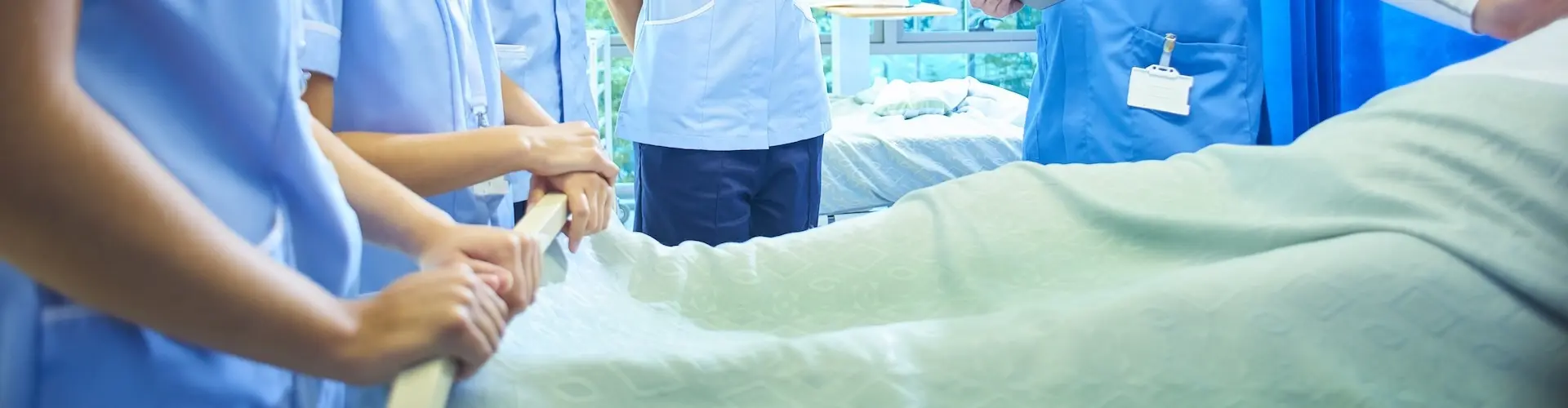
Student nurses on a hospital ward

21 Oct 2026 ● Pass Learn

Adult GCSEs for Nursing: How to Get the Qualifications You Need

Returning to education as an adult takes courage, and for many aspiring nurses the first step is a GCSE they never sat or didn't pass. If that's where you are, take heart: studying GCSEs as an adult is normal, flexible and far more common than you might think. This guide explains how adult GCSEs work and how they fit a nursing career.

Why adults take GCSEs for nursing

Nursing degrees ask for Level 2 English and Maths, usually at grade 4/C, and often a science. Plenty of capable adults left school without these, perhaps life got in the way, perhaps school just wasn't the right time, and now need them to progress. Taking GCSEs as an adult closes that gap. The Nurses.co.uk guide to nursing qualifications shows exactly where Level 2 sits on the road to a nursing degree.

How adult GCSEs work

You don't return to a school timetable. Adult GCSEs are studied flexibly, typically online, and you sit your exams as a private candidate at an approved centre. Pass GCSE offers dedicated adult GCSE provision, including adult GCSE courses and information on adult GCSE exams, while Pass Learn provides online GCSEs you can fit around work and family. Studying at your own pace, from home, makes returning to education realistic for busy adults.

Which subjects do you need?

Focus on what your target nursing courses require. English Language and Maths are near-universal; a science such as Biology or Combined Science is required by many programmes. Rather than collecting GCSEs for their own sake, check two or three universities you're interested in and gain the specific subjects they ask for. Requirements vary, so confirm directly with each institution.


Ready to return to study?

Explore adult GCSE courses with Pass GCSE.


Adult GCSEs or an equivalent?

GCSEs aren't the only way to evidence Level 2. If your universities accept equivalents for English and Maths, Functional Skills Level 2 can be quicker and more flexible. Where a course specifically names GCSE Science, though, an adult GCSE is usually the route. Choose based on what your courses require, not on assumptions.

Fitting GCSEs around your nursing plans

Many adults study a GCSE while progressing their Access to HE Diploma (Nursing). Because both can be studied online and flexibly, you can build Level 2 and Level 3 together and reach your UCAS application with everything in place, rather than adding an extra year.

It's never too late

Some of the most respected nurses came to the profession later in life, bringing maturity and real-world experience patients value. An adult GCSE is simply the first practical step. Take it at your own pace, and a nursing degree moves firmly within reach.


Prefer to study with Pass Learn? See online GCSEs.


Related blogs

Two nurses talking on their way to work

Can Functional Skills Level 2 Help You Get Into Nursing?

Functional Skills Level 2 in English and Maths are widely accepted by universities as equivalent to GCSEs for nursing entry, offering adults a flexible route to meet Level 2 requirements. They can often be studied alongside an Access to HE Diploma, helping learners prepare for a nursing degree.
Career Pathways
A group of students in a seminar

GCSE Resits for Nursing: What to Do If You Need Maths, English or Science

GCSE resits provide a flexible route for aspiring nurses who need to improve their English, Maths or Science qualifications to meet university entry requirements. Studied online as a private candidate, they can often be completed alongside an Access to HE Diploma, helping adult learners progress towards a nursing degree.
Career Pathways
Two students in a classroom talking

What Is an Access to Higher Education Diploma?

An Access to HE Diploma is a flexible, online Level 3 qualification for adults without A Levels, providing a recognised pathway into university degrees, particularly in nursing and healthcare. Completed in 9–12 months, it prepares learners for higher education through subject-focused study and assignment-based assessment.
Career Pathways