
16 Sept 2021 ● Matt Farrah, Nurses.co.uk Founder
What Will A Rise In Social Care Costs Mean For Care Providers and Users?
 What Will A Rise In Social Care Costs Mean For Care Providers and Users?
According to BBC News research, disabled and vulnerable adults in England are facing steep increases in the amount they need to pay towards their care.
151 councils across England were sent Freedom of Information requests enquiring how much those living in the community had to contribute towards their care.
In the 83 council areas that responded, the amount people who receive care are paying has grown to £420m in 2020-21, up from £369m in 2018-19.
Also, in half of those 83 council areas, care bills have risen at least 10% over two years. For those requiring greater levels of support, the rise in costs has been especially pronounced.
Is the rise in care costs a symptom of the government’s delaying of social care reform, or have people’s care requirements simply overloaded existing arrangements? Comment Like ❤️ Reply below.
Jackie O'Sullivan from the charity Mencap, said the rise in charges meant some of the least well off in society were having to make up a shortfall in funding; funding which in her opinion should be forthcoming from the government.
She explained that only 6% of people with learning disabilities are in work, so coming up with extra money wasn’t possible for most.
Do you agree with Ms. O’Sullivan that any shortfall in funding should be made good by the government? And if not from the Government, where would the extra money come from?
Directors of council care services blame years of government funding cuts.
Cath Roff, of the Association of Directors of Adult Social Services, said 10 years of ‘austerity’ had left councils "really stretched". She called on the government to "bring forward [social care] reform now".
"We've got people coming forward with increased needs…[and] we have a workforce crisis" she said. Raising care charges was "not what any local authority would want to do" she added.
How much can ‘austerity’ be blamed for the lack of funding, and does the uneven, sometimes incoherent nature of social care provision mean that the cost of that provision is higher than it might otherwise be?
Earlier this year, a National Audit Office report found 41% of councils with social care responsibilities said they needed to make “substantial” service savings to balance 2021-22 budgets. Measures could include raising care charges.
However, since the beginning of the pandemic, the Department of Health and Social Care (DHSC) has given over £6bn in grants to councils to help tackle the impact of Covid-19 on their services, including adult social care.
Given the amount of money borrowed and spent during the COVID pandemic, do you think there is any reason why government shouldn’t, as a stop-gap measure, give councils with care responsibilities a boost in funding?
Richard Kramer, Chief Executive of national disability charity Sense, said, ‘Many disabled adults are having to pay significantly more towards their care than they did two years ago... Disabled people and their families should not be required to make up for the lack of funding in order to receive the right care and support. The social care system must be affordable and work for those who need it.’
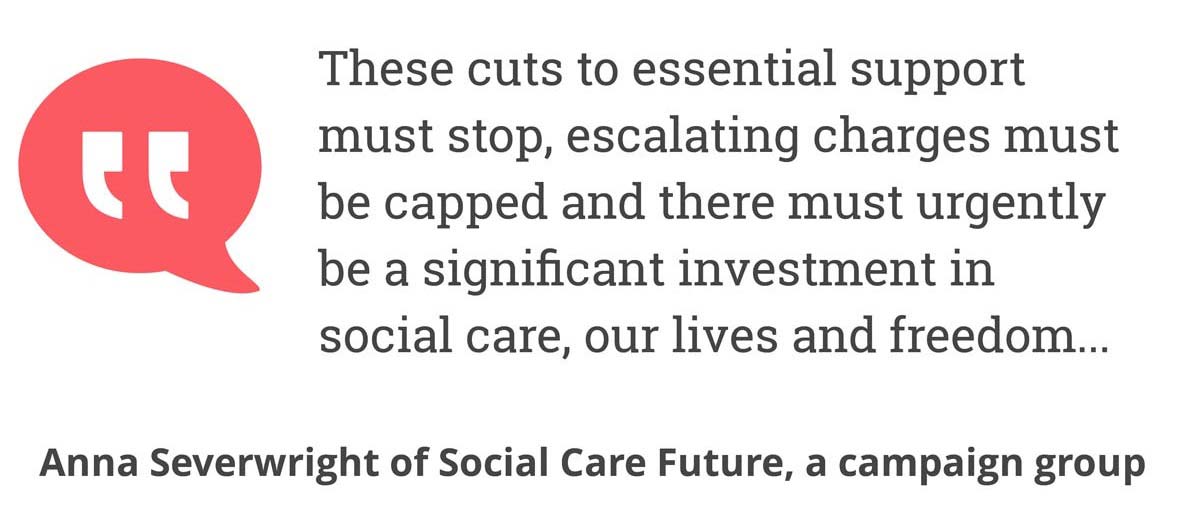
When the government’s social care reforms are finally unveiled, what would you like to see in terms of funding for social care? Should it be centrally funded, NHS-style, or should it be on a more localised, or even individual level?
Please let us know what you think in the comments below, and Like the article if you found it interesting.
Thanks.