10 May 2017 ● Ruth Underdown, Adult Nurse
How can nurses manage death and the care of the dying?
It’s Death Awareness Week. As nurses we experience life and death as part of our everyday jobs. What can we be doing to learn and train for end of life care?
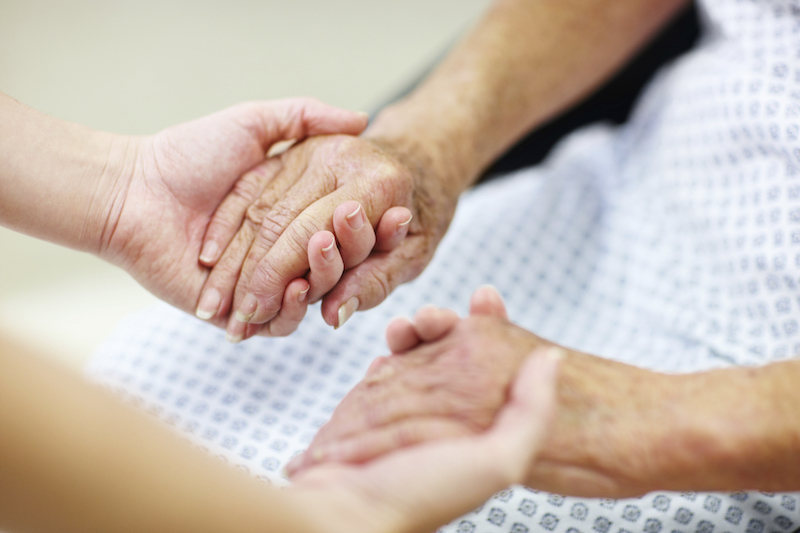
"Life asked death, 'Why do people love me but hate you?' Death responded, 'Because you are a beautiful lie and I am a painful truth." — Author unknown
It comes to us all but our fear of it, and lack of experience as a modern society, means that we hide from it.
The truth is that all things must end, and that includes us.
With the development of modern medicine, and the medicalisation of death and the dying process, it has come out of the home environment and into the hospital – much like giving birth.
But, like the movement within maternity care to reclaim the birthing process and make it less medicalised, death is also being reclaimed by a growing movement of death doulas or soul midwives.
This week is Death Awareness Week.
What is the purpose of Death Awareness Week?
Promoted and supported by multiple charities, it aims to dispel fears and open up discussion within safe and supportive places; to encourage individuals to take control of what future plans they would like to make regarding their deaths.
These events are taking place around the country and can be found on the Dying Matters website: www.dyingmatters.org.
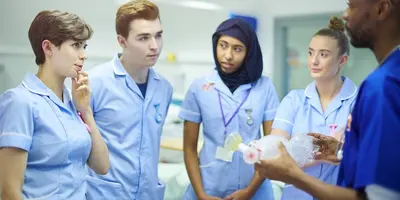
As nurses and health professionals, we experience life and death as part of our everyday jobs.
However, even those involved in the care of the dying don’t always feel equipped to deal with the conversations, and supporting patients and families in making decisions around end of life care.
Fortunately, there is support and training available for nurses to increase their awareness and develop their practice in end of life care, through either undertaking face-to-face training or utilising the RCN Continuing Professional Development tools, for example: www.rcn.org.uk.
We have an obligation to support patients to get the death of their choosing.
It is our one chance to get it right, and should be as important as a birth plan is to midwives as part of our caregiving.
Given the choice, according to the most recent Marie Curie statistics: “63% of people want to die at home, 28% of people want to die in a hospice, 8% of people wish to die in hospital and 1% of people want to die in a care home”: www.mariecurie.org.uk.
Yet, in 2015 – the most recent figures available: “there were 529,655 deaths in the UK. Cancer was the most common broad cause of death (28% of all deaths registered) followed by circulatory diseases, such as heart disease and strokes (26%).”: www.ons.gov.uk.
Of these, 46.7% died in hospital, 22.6% died in a care home, 22.8% at home, 5.6% in hospice and 2.16% in other places: www.fingertips.phe.org.uk.
We still have a long way to go.