26 Aug 2019 ● Nurses news, Nurses.co.uk editorial team
Mental health problems main cause of sick days for NHS workers
A survey by charity Mind found more than half of workers across all industries say they are affected by poor mental health in their workplace.

Staff at breaking point
Stress, depression, and other mental health problems are the main cause of sick days for NHS staff, figures show.
The UK’s largest healthcare workers’ union says “intolerable” working conditions are pushing NHS employees to breaking point, after figures revealed millions of days lost to mental illness.
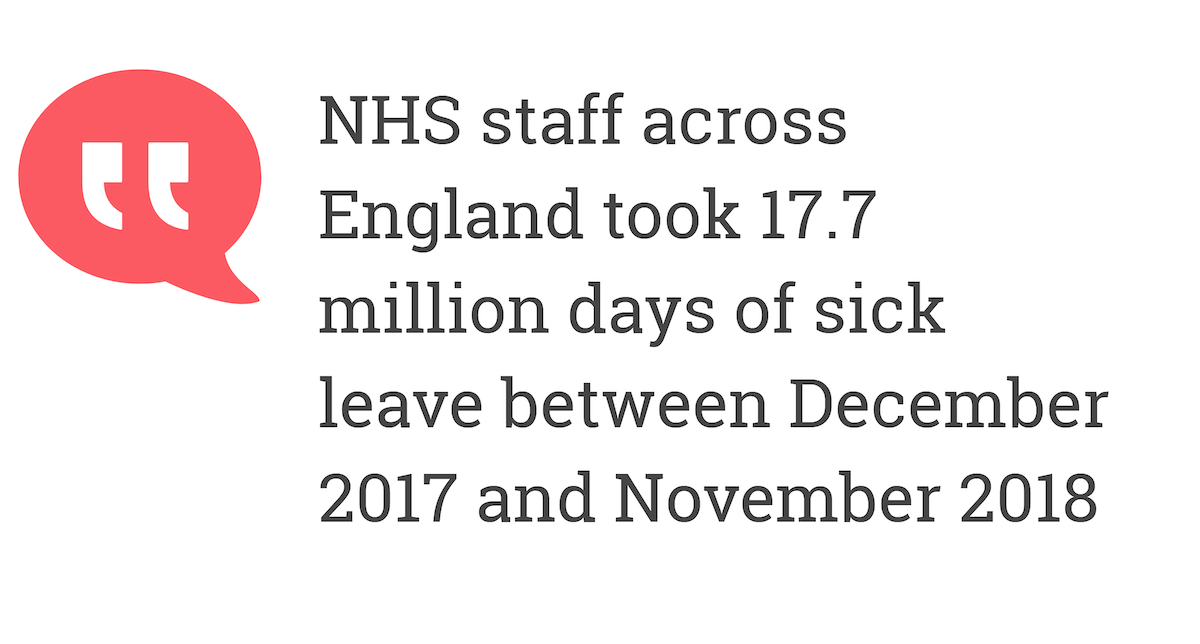
Analysis of NHS Digital figures shows staff across England took 17.7 million days of sick leave between December 2017 and November 2018.
Stress, anxiety, depression
Of these, 4.2 million – almost a quarter – were because of stress, anxiety, depression, or other psychiatric illnesses.
That was more than the next two most common reasons combined – musculoskeletal conditions (excluding back problems) and coughs, colds or flu.
The NHS trust where depression and other psychiatric conditions accounted for the highest proportion of lost days – 38% – was the Sheffield Health and Social Care Foundation Trust.
Helga Pile, deputy head of health at the public sector union Unison, said staff were having to contend with intolerable work pressure, bullying, and intimidation and violence from patients.
NHS staff shortage must be addressed
“It’s in all our interests to protect NHS workers,” she said.
“Chronic staff shortages mean NHS employees are routinely being asked to do more with fewer resources as they desperately try to keep the service afloat.
“The Government urgently needs to invest in the NHS to cut staff shortages and reduce burnout, and workers suffering anxiety, depression and stress must get rapid access to mental health support services.”
According to a survey carried out by mental health charity Mind, more than half of workers across all industries say they are affected by poor mental health in their workplace.
Emma Mamo, head of workplace wellbeing at the charity, said it was important for employers to support struggling employees and tackle work-related causes of mental health problems – including in the NHS.
Extra support is needed
She said: “We know there can be particular barriers for healthcare staff when disclosing a mental health problem to their employer, such as fears about being deemed unfit to practise.
“Those of us with mental health problems can and do make a valuable contribution to the workplace, it just means some of us might need extra support from time to time.
“Healthcare staff can make a real difference to the experiences of people accessing NHS services.
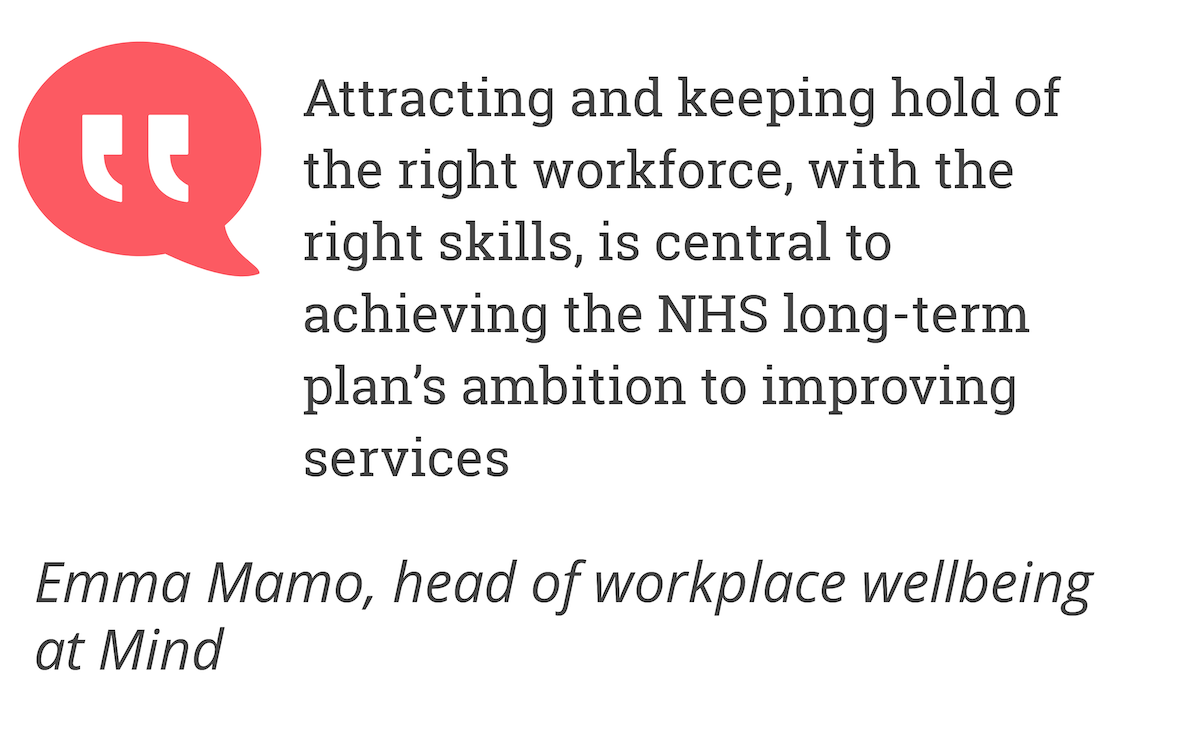
“Attracting and keeping hold of the right workforce, with the right skills, is central to achieving the NHS long-term plan’s ambition to improving services."
A spokesman for NHS England said: “We are committed to ensuring that all NHS employers take care of their staff, offering support, good occupational health, flexible working and a range of other measures. Click here.
“Staff are the lifeblood of the NHS, and we are already offering the most comprehensive national mental health support offer to doctors of any health system in the world, and are committed to doing similarly with other staff groups.” Learn about mental health nurses here.
Related stories
• The mental health of RMNs – are we looking after our practitioners?
• Mental health nurses face increasing emotional pressures
• 85% of Nurses don’t think the New Pay Deal will solve the staffing crisis
• 95% of Nurses say patient health is at risk (and it's due to NHS staff shortages)
• The cost of high staff turnover