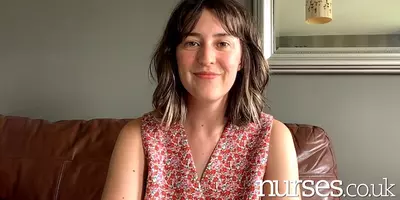
19 Dec 2022 ● Sophie Picton, Substance Misuse Practitioner
Common Prison Nurse Interview Questions
 "Overall, prison nursing builds great Nurses, it teaches the Nurse assertiveness, communication, and de-escalation techniques, like no other nursing setting."
 An insider’s guide to interview questions you might expect when applying to become a Prison Nurse. Sophie Picton shares her experience working in a prison as a Substance Misuse Practitioner.
My Background
I would like to share my experience of working in various prisons in my career, to help others who would also like to work in a prison setting as a Nurse.
This can be a daunting environment and is often based on what people see on the television.
I can emphasise with this as I wanted to work in a prison for a long time however, I kept delaying it based on what I’d seen, until the day I applied for a job role as a Substance Misuse Practitioner, and it was not detailed that the environment was a prison.
Questions Will Be Based Around Working In A Challenging Environment
The difference between an interview for a ward setting to a prison is that the employer needs to know if you can handle an environment which is always challenging.
Therefore their questions will be based around those.
Prisons are excellent for Nurses who like a changing environment, although the work tasks are the same each day, no two days are the same.
Especially in a remand prison where there are many admissions and releases, in a remand prison it is like a revolving door, there are a lot of prisoners that come and go and come back again, especially those misusing substances.
This can be disheartening to a Substance Misuse Nurse when you have worked so closely with them to combat their addictions and work towards sobriety and they come back, malnourished, homeless, taking drugs and with further criminal charges.
However, it is about understanding the person as a person and not seeing them as their addiction.
We also have Primary Care Nurses in prison who look after those with long term health conditions, their duties include; wound care, phlebotomy, ECGs, medication, acute and emergency care.
We also have Mental Health Nurses working in prisons who are integral to the nursing team as most of our patients experience mental health.
It is beneficial to have an understanding/experience/qualification in mental health in order to provide better health outcomes to your patient no matter what type of Nurse you are in the prison setting.
Questions We Ask Candidates At Interview Stage
What Makes You Suitable For This Role?
It is okay to not have had any prison experience, but it is about the way you explain your answer, for example, in my first prison interview I said, ‘I am a blank canvas, and you can paint me how you want me to be’.
This shows duty of candour, being open and honest without saying you have no idea what you’re doing.
I received feedback about this answer and the employer said it was the best answer she had heard.
How Do You Deal With Stress?
Employers are letting you know it is a challenging environment and asking if you can deal with a with that type of environment for longevity.
You can speak about yourself, care practices and coping mechanisms. Such as exercise for self-care and communicating when you are finding workloads difficult.
How Would You Manage Your Own Workload?
In prison nursing, the workload is autonomous.
There is a lot of lone working, where you go to see the patient and make decisions on your own.
This is great for yourself development and helps to build a professional rapport with the patients.
The key point here is to prioritise your workloads and ask for help if you are struggling.
Explain to the employer how you would prioritise your workloads, for example by order of importance, for example those patients who are acutely unwell will need high priority and you would assess these patients first.
Why Do You Want To Work In A Prison?
This would be asked to check your suitability and understanding of the role you’re applying for as the prison setting is not for everyone.
You could speak about making a difference to a vulnerable population of patients.
Address the skills you feel you have which relate to the current role, such as assertiveness.
You could speak about how your personal or professional experience relates to the role.
As with all interviews it is important to make sure you ask questions to the employer to display your interest in the role.
Therefore, research into the role is paramount.
Questions You Might Like To Ask?
How Will You Be Supported By The Management Team?
You will be allocated a mentor and will not be counted in the numbers, to enable you to shadow all areas of the multi-disciplinary team for however long you feel you need.
You will have monthly 1:1 supervision that you manage, where you can discuss training opportunities, areas of development and any concerns you may have for example.
Overall, prison nursing builds great Nurses, it teaches the Nurse assertiveness, communication, and de-escalation techniques, like no other nursing setting.
As well as this, there are many different types of prisons, for example different categories of prisoners, A, B, C, + D, remand prisons and sentenced prisons.
Remand prisons hold prisoners who are not yet found guilty of the alleged crime and not sentenced.
Sentenced prisons which are usually long-term prisons where the prisoner has been found guilty.
Prior to application and interview stage it is beneficial to research the type of prison you are applying for, in order to gain an understanding of the type of patients you will be looking after.
Overall, prison nursing builds great Nurses, it teaches the Nurse assertiveness, communication, and de-escalation techniques, like no other nursing setting.
Thank you for reading and I wish you every success in your future career as a Nurse.
Read more about being a Nurse in a prison.
Browse our Prison Nurse jobs