
7 Nov 2022 ● Matt Farrah, Nurses.co.uk Founder
Can More Investment Help The NHS Break Its Dependence On Agencies and International Staff?
 “With demoralised and unvalued nursing staff leaving the profession in their droves, the need to pay nursing fairly, to spend money wisely and protect our NHS could not be more pressing” RCN general secretary Pat Cullen
A study commissioned by the RCN has described the reliance on international recruits and agency staff as a 'false economy'.
The Actual Costs Of International and Agency Staff
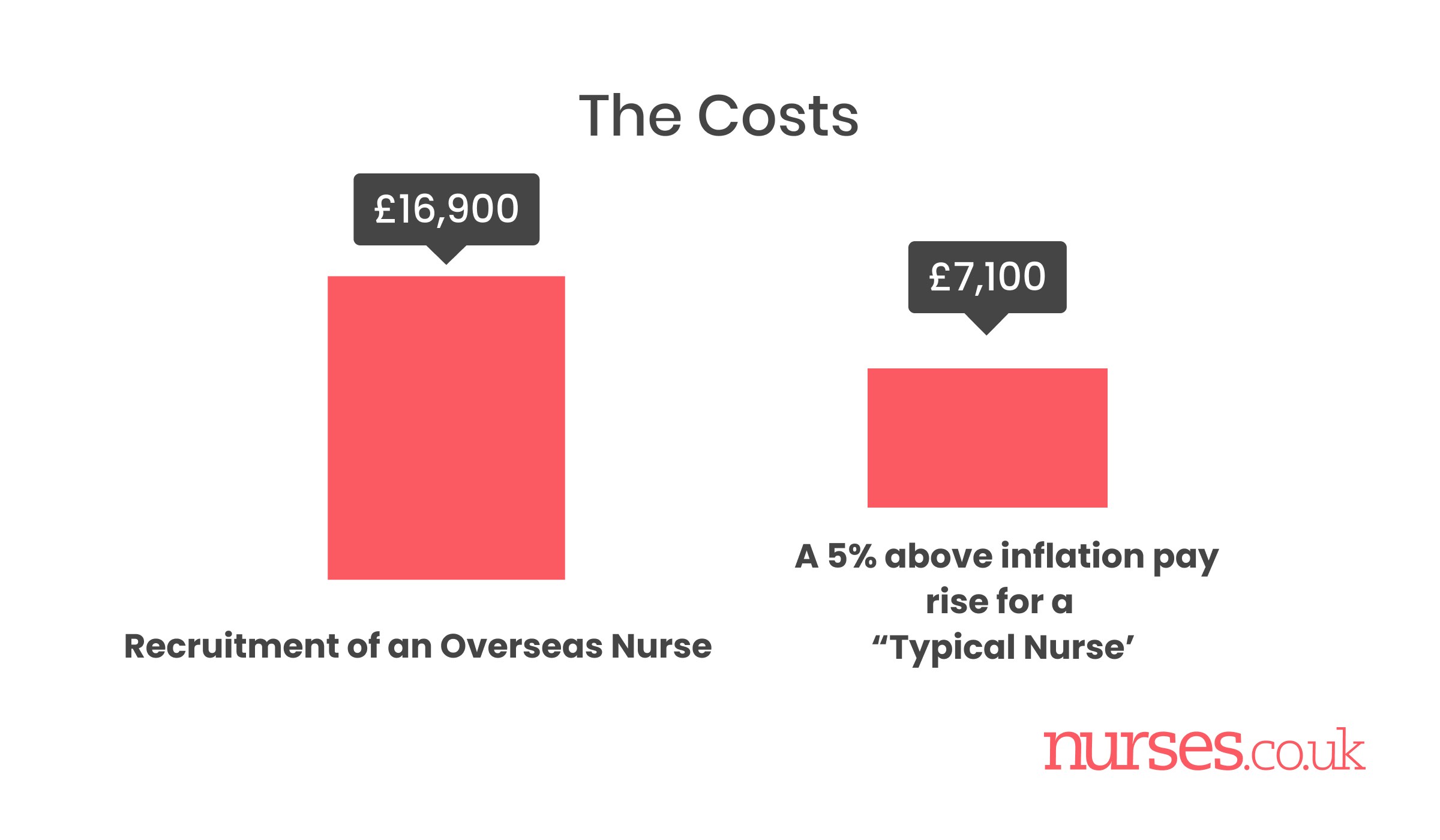
According to the study, international recruitment of Nurses costs nearly 2.5 times what it would cost to give a 5% above inflation pay rise to experienced Nurses considering leaving the profession.
The cost of recruiting a single overseas Nurse is £16,900 compared with £7,100 it would cost to give a 5% above inflation pay rise to a ‘typical Nurse’.
The cost of hiring agency Nurses is approximately three times that of a 5% above inflation pay rise; costing around £21,300 per agency Nurse.
So Why Aren’t We Doing More Towards Staff Retention?
‘At a time of grave financial uncertainty and record nursing vacancies affecting patient care, ministers must do what is fiscally responsible. It is a false economy to let experienced staff walk away over poor pay and conditions only to spend more recruiting internationally,’ said RCN general secretary Pat Cullen.
‘Our NHS is built on the shoulders of our international colleagues and agency Nurses play a vital role in patient care, but the UK government must strengthen the domestic workforce and ensure we have long-term, sustainable solutions for the health and care crisis’ she added.
Although the NHS is going to be reliant on agency and international healthcare workers for the foreseeable future, what measures could be put into place now that would decrease this reliance over time? And do you think there would be sufficient political will and economic backing to make those measures viable and the aim achievable?
And There Is Slow Growth
According to a WHO report, from 2010 to 2021, the number of Nurses in the UK only grew from 84.1 to 84.7 per 10,000 of the population. Midwife numbers during the same period only grew from 4.8 to 4.9 per 10,000 of population.
An ageing population means greater demand for health and social care services. Longer life spans can also create a long-term care requirement for conditions that would have been fatal in the past but are now manageable, which again places pressure on finite healthcare resources.
Core spending for Health and Social care has increased each year since 2007, even during ‘austerity’, and is projected to increase each year to 2025, although current events may alter this situation once the government makes its financial statement in November.
Does This Make Sense?
Do you think that the popular understanding around ‘austerity’ will mean that although the NHS budget will continue to grow year on year (in monetary, if not ‘real’ terms), any meaningful reform to staffing arrangements will become a low priority, meaning agency and international healthcare workers will remain a systemic part of NHS staffing in the years ahead, despite more money being ploughed into the health service?
The RCN-commissioned study also highlighted concerns about future workforce numbers. In 2025, it is estimated that 2,000 fewer nursing students will graduate than in 2024.
The RCN labelled this decline in the numbers of Nurses and future Nurses as the ‘greatest risk to publicly funded health and care services since their creation’.
Current Deficit Of NHS Staff
At present, there are approximately 20,000 new Nurse graduates and 2000 Midwives graduating annually, but in the year 2020-21 just over 25,000 Nurses and nearly 1,500 midwives left the NMC register, so there is already a deficit which can only be addressed with recruitment from overseas.
Given the massive oversubscription for university places on healthcare courses, should the government be immediately and dramatically increasing the number of training places it is willing to fund, so that in 3-5 years’ time, there will at least be an increased supply of newly qualified healthcare professionals?
Government data shows that the NHS has been spending more than £800 million a year on agency Nurses since 2016-17. In that year agency spending topped £966 million.
The total spent on locum agency nursing staff in 2020-21 came to almost £838 million, a slight decline from the previous year’s total of more than £878 million.
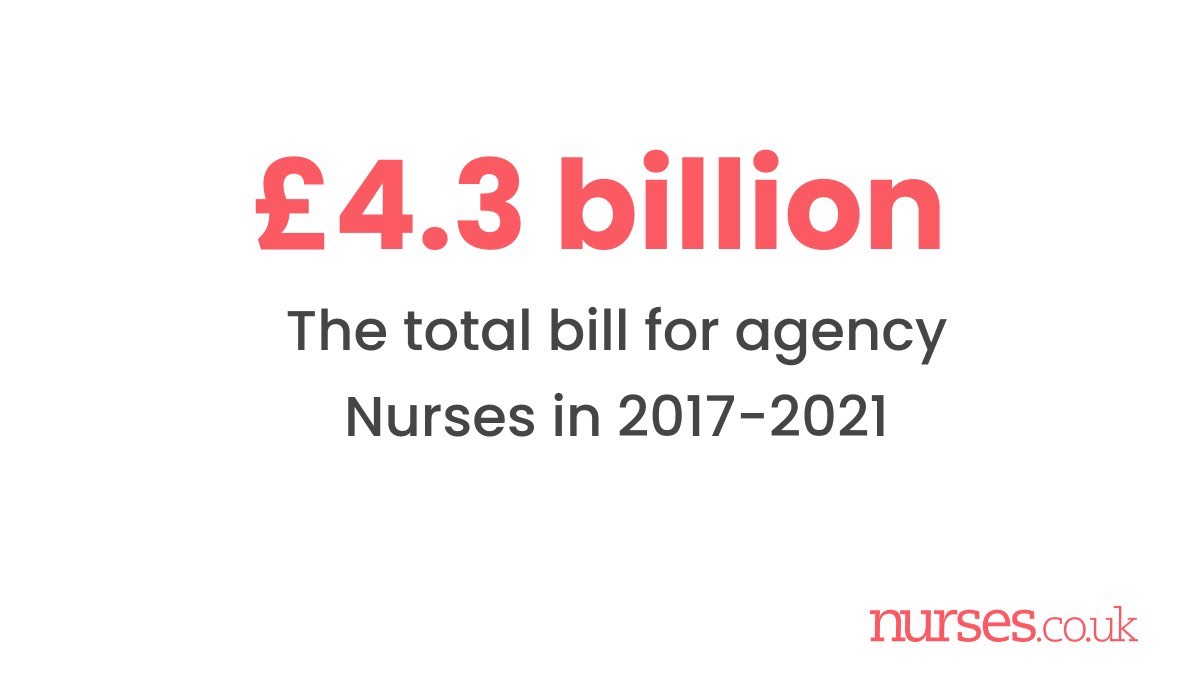
For the period 2017-2021, the total bill for agency Nurses exceeded £4.3 billion.
RCN general secretary Pat Cullen said that while agency Nurses have a ‘vital role’ to play in providing safe care, temporary staff should not be used to offset a lack of full-time registered Nurses
‘Ministers must finally heed our call for a fully funded workforce plan for each part of the UK’ she implored.
Are The Figures Looking Better?
A DHSC spokesperson responded, saying ‘There are over 29,000 more Nurses working in the NHS now compared with September 2019, and NHS spending on agency staff has dropped by a third since 2015-16…We have also commissioned NHS England to develop a long-term workforce plan to help recruit and retain more NHS staff’
Is The NHS Equipped To Manage Current Demands and Those Of Future Workforce Needs?
Do you think the NHS has the managerial bandwidth to simultaneously manage contemporary crises and plan for future workforce needs when it has, partially because of lockdown policies, growing waiting lists and some services already at breaking point?
And what tangible difference would any increased investment make in such a situation?
Please let us know what you think in the comments, and Like the article if you found it interesting.
Thanks.