
14 May 2020 ● Matt Farrah, Nurses.co.uk Founder
A guide to NHS Agenda for Change and how it affected nurses pay
 "Little is known about the future of nursing pay, but the coronavirus pandemic has put it firmly into the spotlight again."
Here we take a look at how nursing pay has changed since Agenda for Change was introduced in 2004, and what the future may hold for nursing salaries.
Topics covered in the article
How were Nurses paid before Agenda for Change?
How has Agenda for Change affected Nurses’ pay since 2004?
What next for Agenda for Change pay?
What is Agenda for Change?
Agenda for Change (AfC) is the grading and pay system used for the majority of NHS staff, including Nurses.
It was introduced in 2004 and was one of the biggest changes within the NHS since it was founded in 1948.
How were Nurses paid before Agenda for Change?
Nursing pay was historically organised within the ‘Whitley System’, which was used throughout the public sector.
But towards the end of the 20th Century it came under increasing criticism for being overly complex, too centralised and unable to offer equal value.
Perhaps most importantly, critics felt it couldn’t be adapted to meet equal gender pay targets.
These criticisms ultimately led to the creation of the current Agenda for Pay system, with a structure that was far more transparent for both employers and Nurses.
And for the first time, specific roles were tied to specific salaries – which gave real clarity for prospective Nurses, jobseekers, employers and everyone else in between.
How has Agenda for Change affected Nurses’ pay since 2004?
Nursing pay has unfortunately remained somewhat stagnant since Agenda for Change was introduced, for a number of reasons.
The global recession of 2008 affected all sectors, and Nursing was no different.
Nursing pay between 2010 and 2015 increased by only 2.2%, which wasn’t in line with inflation.
Then, between 2015 and 2017 a 1% increase was implemented each year.
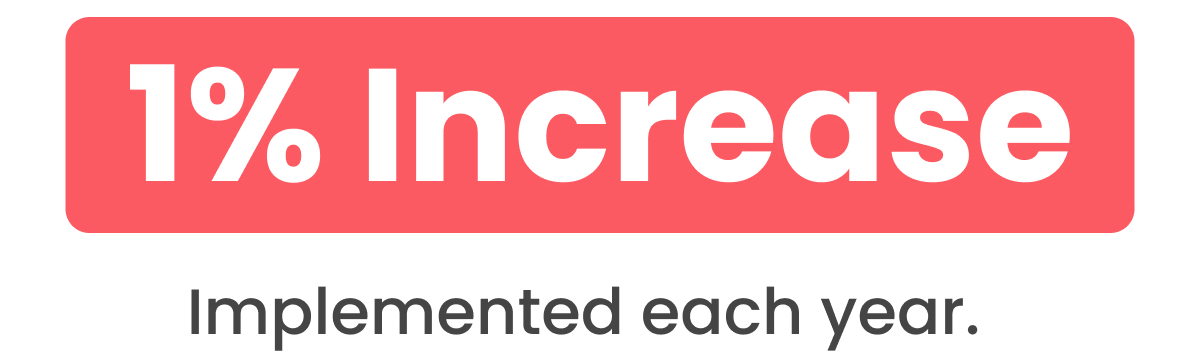
Unsurprisingly, this was heavily criticised, most vocally by trade unions like Unison.
As a result, in 2018 the so-called ‘New Pay Deal’ was introduced.
This meant that between 2018 and 2021, all Nurses would see a minimum salary increase of at least 6.5% - and some could see their pay rise by as much as 29%.
Then, in 2021 a new pay increase was agreed - this time adding 3% to the salaries of NHS workers, followed by an approximately 4% increase in 2022.
Despite many delays and protests, a 5% increase was agreed in May 2023 - and most recently, a 5.5% increase in pay was announced in July 2024, followed by 3.6% in 2025.
The extent of each increase depends on where within each NHS pay bands a Nurse sits in terms of experience.
You can see exactly how salaries have changed since 2018 using our New Deal Pay Calculator.
What next for Agenda for Change pay?
In 2024, a change in government brought unexpected change, when a more generous 5.5% pay rise was confirmed despite most experts predicting a rise of 2-3%.
But most recently, in May 2025, a 3.6% increase was announced. This is slightly above inflation, and according to most experts, above what the government can afford.
Nonetheless, it has been greeted by criticism from unions who consider this rise to be too low. Doctors' pay rise for 2025-26 is actually higher, which has intensified the situation further. Protests have even been suggested.
So the future, as ever, remains uncertain for both nursing pay, and Agenda for Change.